Special Guest: Dr. Tim Wei presents on Strategic, Sustainable Technology Disruption

Matthew Chang, PE
Founder
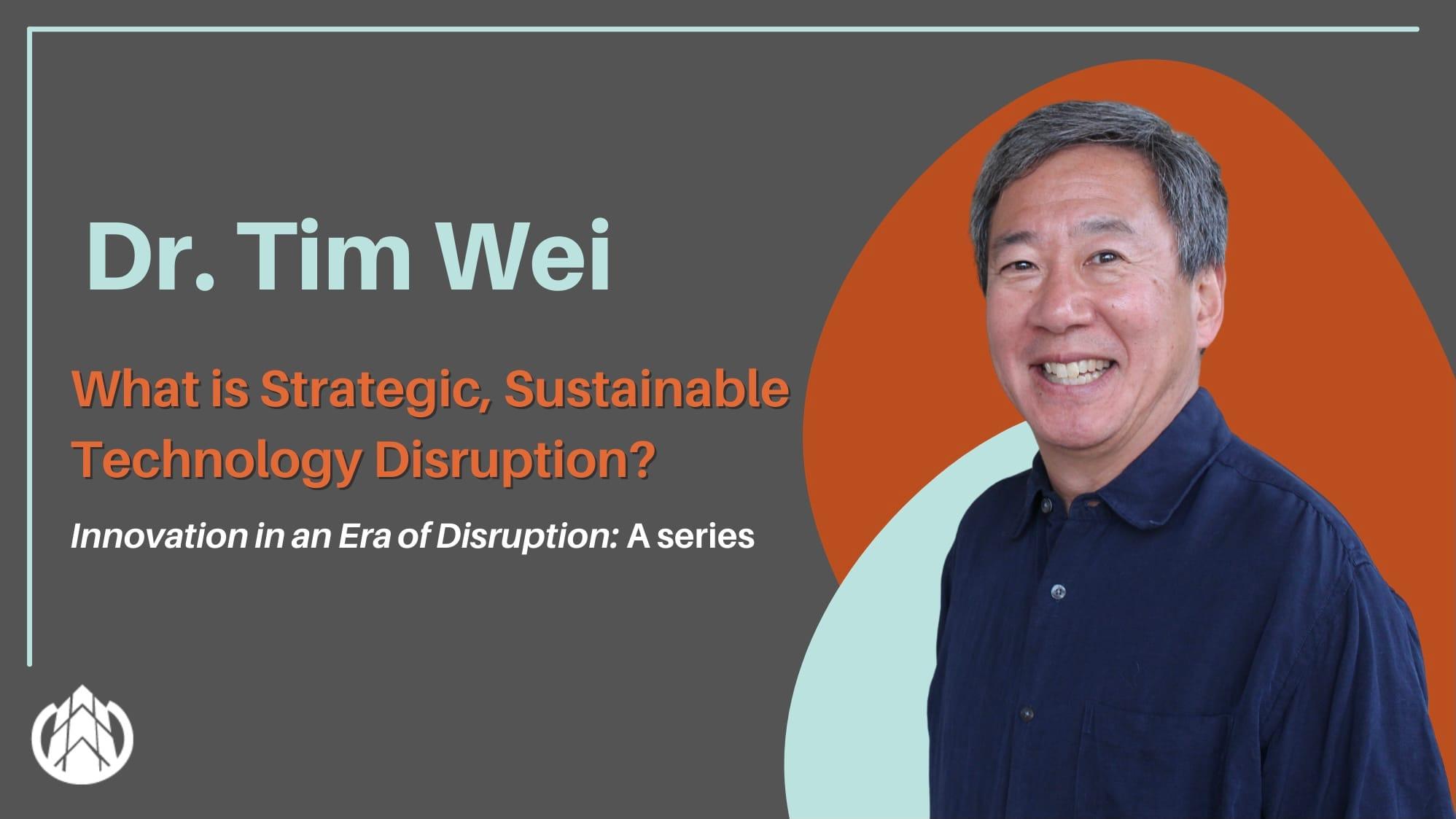 Fig. 01Articles and Media
What is Strategic, Sustainable Technology Disruption?
We define technology innovation as the creation of new, or novel application of existing, technologies irrespective of added value or benefit. Obviously, in an era of increasingly limited resources coupled with growing needs, profitability and novelty should not be sufficient criteria for innovation.
A disruptive technology innovation is one that has profound implications on a system. While disruption can occur anywhere, from a localized way to a global scale, the word generally has connotations of major change on a much larger scale. Examples of technology disruptions on a global scale include the role of social media on geopolitical events, and the pending transformation of transport and commerce through the ubiquitous use of autonomous vehicles.
Technology disruptions, by definition, can be either stabilizing or destabilizing. That is, they can serve to help address systemic challenges in ways that can never be achieved through incremental change, or they can introduce highly destabilizing forces into a system. As a result, we introduce the phrase, sustainable technology disruption, to focus attention on those innovations that lead to a more secure, equitable long-range future for society.
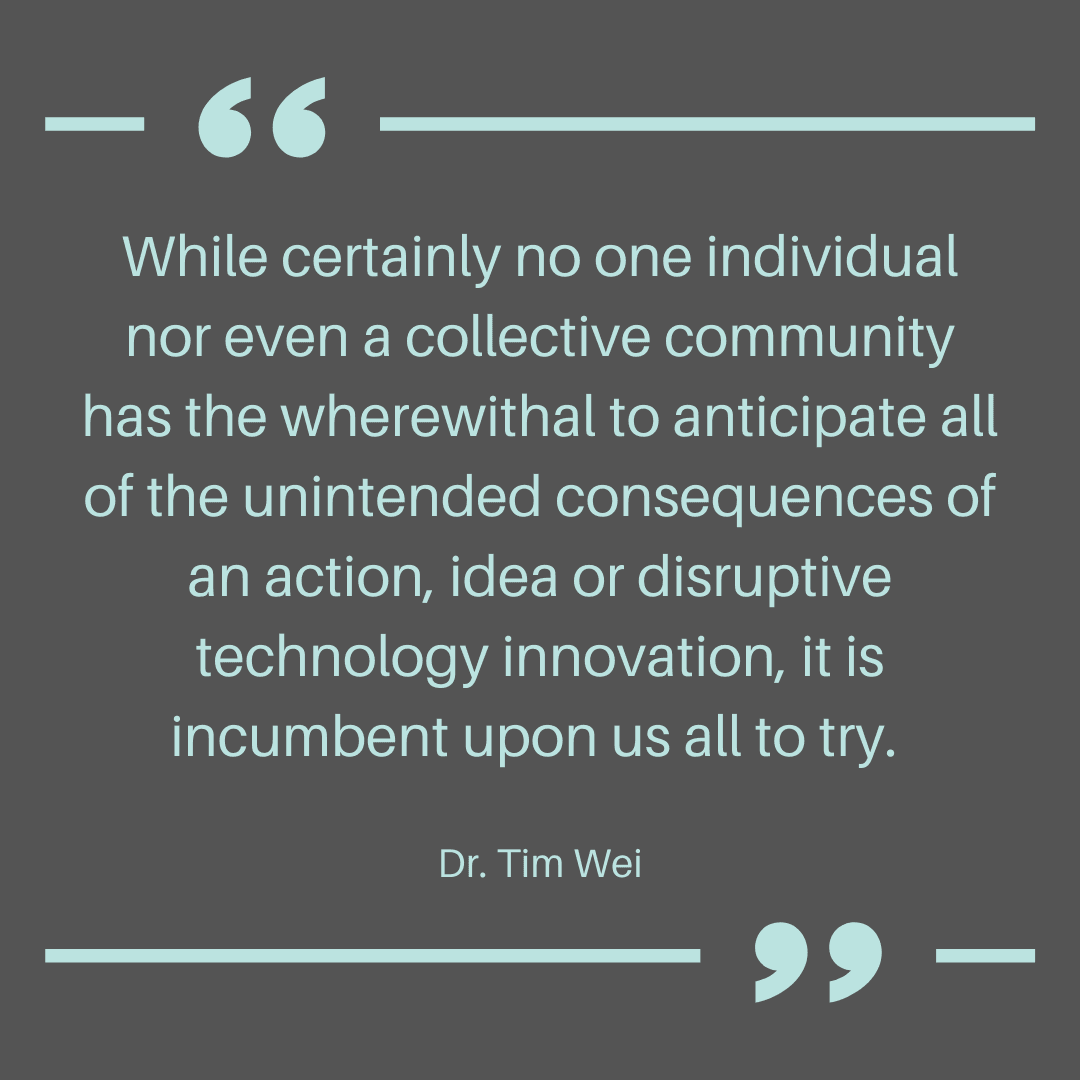
Finally, recognizing that we live a resource limited existence, there is a need to be strategic about what and how we develop and introduce sustainable technology disruptions. Everything in life, from the planet itself to human relationships are highly complex and non-linear. While certainly no one individual nor even a collective community has the wherewithal to anticipate all of the unintended consequences of an action, idea or disruptive technology innovation, it is incumbent upon us all to try.
-Dr. Tim Wei, Author
Timothy Wei, PhD
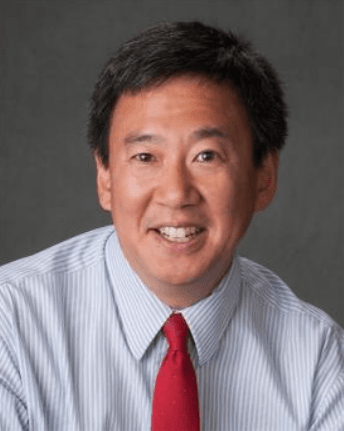
Dr. Wei is a visionary thought leader and change agent. With over thirty years of experience as a researcher, educator, higher education administrator and leader in government relations, he has broad experience and a wide network of innovators and researchers across industry and premier research universities. He has been building strategic public-private-partnerships around critical technology challenges facing society (including healthcare for a changing society, feeding a growing global population at the nexus of advanced manufacturing and food, 22nd century infrastructure for a world of autonomous vehicles and defense). As a former dean of engineering at two major research universities (with responsibility for ~$80M annual budgets and over 300 employees) and as Sr. Vice President for Public Affairs and Outreach at ASME, Tim has created communities at the interface of academia, industry and government. He has helped develop technology innovations and roadmaps for individual start-up companies, multi-national industry consortia and university technology R&D centers. At the same time, he has helped redirect complex under performing organizations pivot and achieve unprecedented growth and success.
For more on Tim Wei:
https://www.linkedin.com/in/timothy-wei-94221740
More thought leadership from Tim Wei:
To stay tuned for our continued series on Innovation in an Era of Disruption, follow us on LinkedIn and Twitter.
Additional resources for learning:
Engineering Insights from Dr. Tim Wei
Exponential Change- Innovation in an Era of Disruption
3 Considerations for HOW to Innovate in an Era of Disruption
Matthew Chang, PE
Founder
Matthew founded Chang Robotics in 2017 and brings two decades in advanced manufacturing, with engineering projects across 20 disciplines.
Keep Reading
Related Articles
 01
America can manufacture at cost-parity with China
Automation shrank labor’s share of unit cost, which changes what the US is competing on. Matthew Chang on why parity with China is reachable, and what has to be true about the workforce for it to happen.
Oct 20, 2026Read → 02
Nobody Is Building a New Plant Without Automation (Matthew Chang on Cheddar)
Matthew Chang on Cheddar: automation used to need a financial justification, and in 2026 it is the base case. What that changes about new plants, and about who works in them.
Oct 13, 2026Read → 03
There Is Not Enough Skilled Labor for the Factories Being Built (Matthew Chang with Jane King)
Every industry vertical is expanding at the same time, the skilled workforce to staff those plants does not exist in the numbers required, and supply chains are stretching. Matthew Chang’s advice to any manufacturer weighing automation is to get the plan lined out now, because the speed at which you move is a decision you can make later.
Oct 13, 2026Read →
Done Reading? Let's Talk About Your Floor.
Tell us what you're trying to solve. We'll tell you what automation can and can't fix.